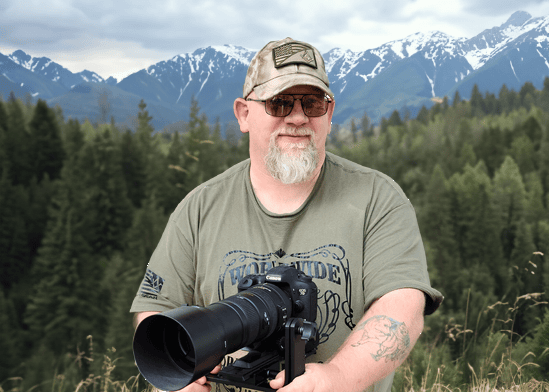


Most people come to nature and wildlife photography for the images.
That makes sense. Cameras, lenses, light, and timing are what draw people in. But photography outdoors does not happen in a controlled environment, and that reality is rarely addressed in any meaningful way.
Weather changes.
Trails are longer than they look.
Light fades faster than expected.
Batteries die.
Bodies get tired.
Judgment slips.
Over the years, I’ve come to believe that teaching photography without addressing these realities does people a disservice. That belief is why Fieldcraft for Photographers is now a formal and mandatory part of my in-person workshops.
This isn’t a marketing angle. It’s a responsibility.
What Do I Mean by “Fieldcraft”?
Fieldcraft is not survival training.
It is not fear-based instruction.
It is not about turning photographers into wilderness experts.
Fieldcraft is the practical application of judgment, preparation, and planning in outdoor environments.
In simple terms, it’s about making sure that learning photography never comes at the expense of personal safety.
Fieldcraft answers questions most photography instruction ignores, such as:
- What happens when weather turns unexpectedly?
- What do you do when fatigue or low blood sugar starts affecting decision-making?
- How do you plan a shoot so someone knows where you are if something goes wrong?
- What equipment matters when the goal is to get home safely, not just get the shot?
These are not hypothetical concerns. They are real, recurring issues for people who spend time outdoors with cameras.
Why I’m Uniquely Qualified to Teach This
I don’t approach this subject academically or hypothetically.
During my military service, I participated in multi-day marches across undulating and elevated terrain, often covering distances of 30 miles or more per day. One such march exceeded 150 miles. On the final night of that march, despite youth and physical conditioning, I developed hypothermia and very nearly died.
Years later, with far more experience but also with health limitations, I underestimated the length of a trail and my ability to complete it safely. My blood sugar dropped dangerously low, bringing me close to a diabetic coma.
On another occasion, I fell into a waterfall while photographing, resulting in torn meniscus and torn medial collateral ligaments in both knees. Those injuries remain unrepaired and continue to affect me today.
None of these incidents occurred because I was careless or reckless. They occurred because the outdoors compounds small miscalculations quietly and without warning.
Experience reduces risk. It does not eliminate it.
That reality informs everything I teach.
Why This Matters in Photography Workshops
Photography workshops often focus on gear, settings, and composition. Those things matter, but they are only part of the equation.
When people are tired, cold, dehydrated, or cognitively compromised, learning stops. Worse, risk increases.
By incorporating fieldcraft into my workshops, I ensure that participants:
- Understand how to plan realistically for outdoor conditions
- Carry essential safety equipment as a matter of routine
- Recognize early signs of fatigue, exposure, and poor decision-making
- Prioritize judgment over stubbornness or sunk-cost thinking
- Focus on photography from a position of safety and control
This doesn’t detract from learning photography. It enhances it.
Prepared people make better images because they can concentrate on seeing, not surviving.
What Fieldcraft for Photographers Covers
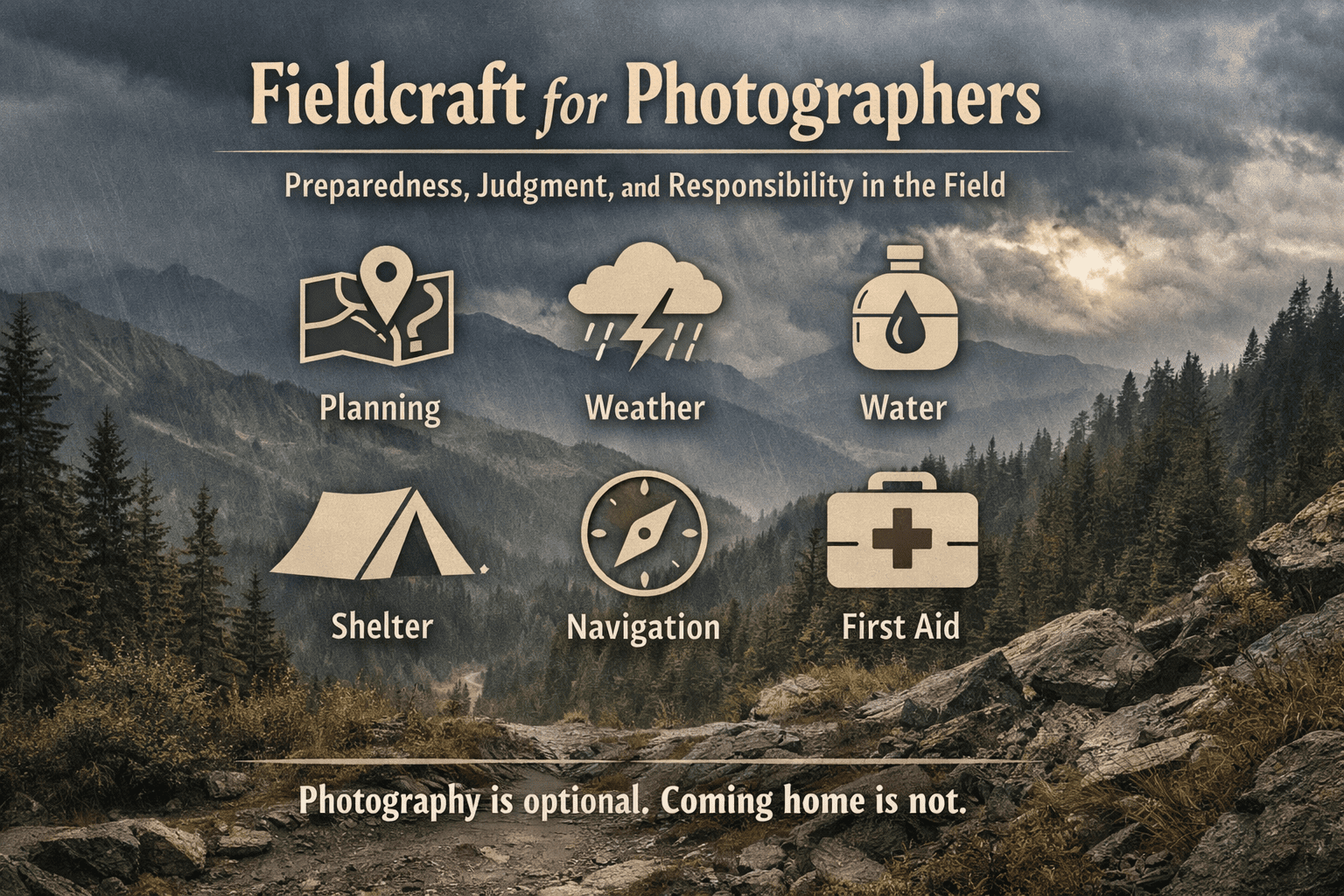
Without turning workshops into survival courses, fieldcraft instruction includes:
- Basic planning and communication before entering the field
- Essential safety equipment and why each item matters
- Managing energy, hydration, and cognitive load
- Understanding environmental risks specific to photography locations
- Ethical decision-making, including when not to take a shot
- Why having a plan, and sticking to it, matters more than gear
This instruction is woven naturally into workshops, not bolted on awkwardly.
Why It’s Mandatory in My Workshops
This part is important.
Fieldcraft is not optional in my in-person workshops. Not because I enjoy rules, but because I have a responsibility to the people I teach.
Photography is optional.
Coming home is not.
Anyone who joins one of my workshops should expect instruction that respects both the craft and the environment it takes place in. That includes honest conversations about risk, preparation, and limits.
Who This Is For
This approach is best suited to:
- Beginner and intermediate photographers
- Serious hobbyists who want to improve responsibly
- People who value understanding why decisions matter
- Those who want small, deliberate workshops rather than rushed group outings
If you’re looking for shortcuts, influencer tricks, or high-volume experiences, this likely isn’t the right fit.
If you value clarity, preparation, and learning that holds up in the real world, you’ll feel at home here.
Looking Ahead
Fieldcraft for Photographers will continue to expand across my educational offerings, including written guides and future online courses. The goal remains the same… to help people make better decisions outdoors and come away with images they can be proud of, without unnecessary risk.
The outdoors doesn’t care how experienced you think you are.
Respecting that fact is where good photography, and good judgment, begin.
Photography is optional.
Coming home is not.
—
Miguel Denyer
Captured Wilderness Photography