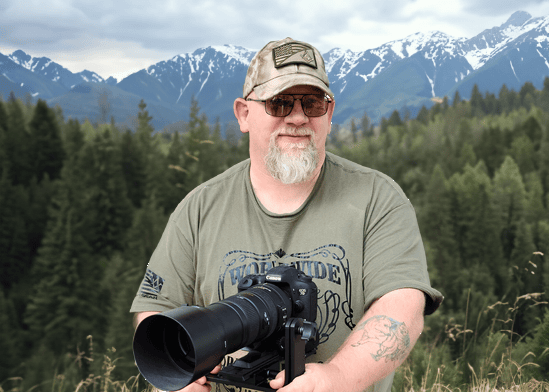


One of the most common questions I hear, especially from people new to photography, is deceptively simple:
“What camera do you use?”
It’s an understandable question, but it’s also the wrong one.
At its core, a camera is nothing more than a device that records light and shadow. Light enters through a mechanical iris, passes through optical elements, and strikes a recording medium. Historically that medium was cellulose-based film. Today, it is an electronic sensor.
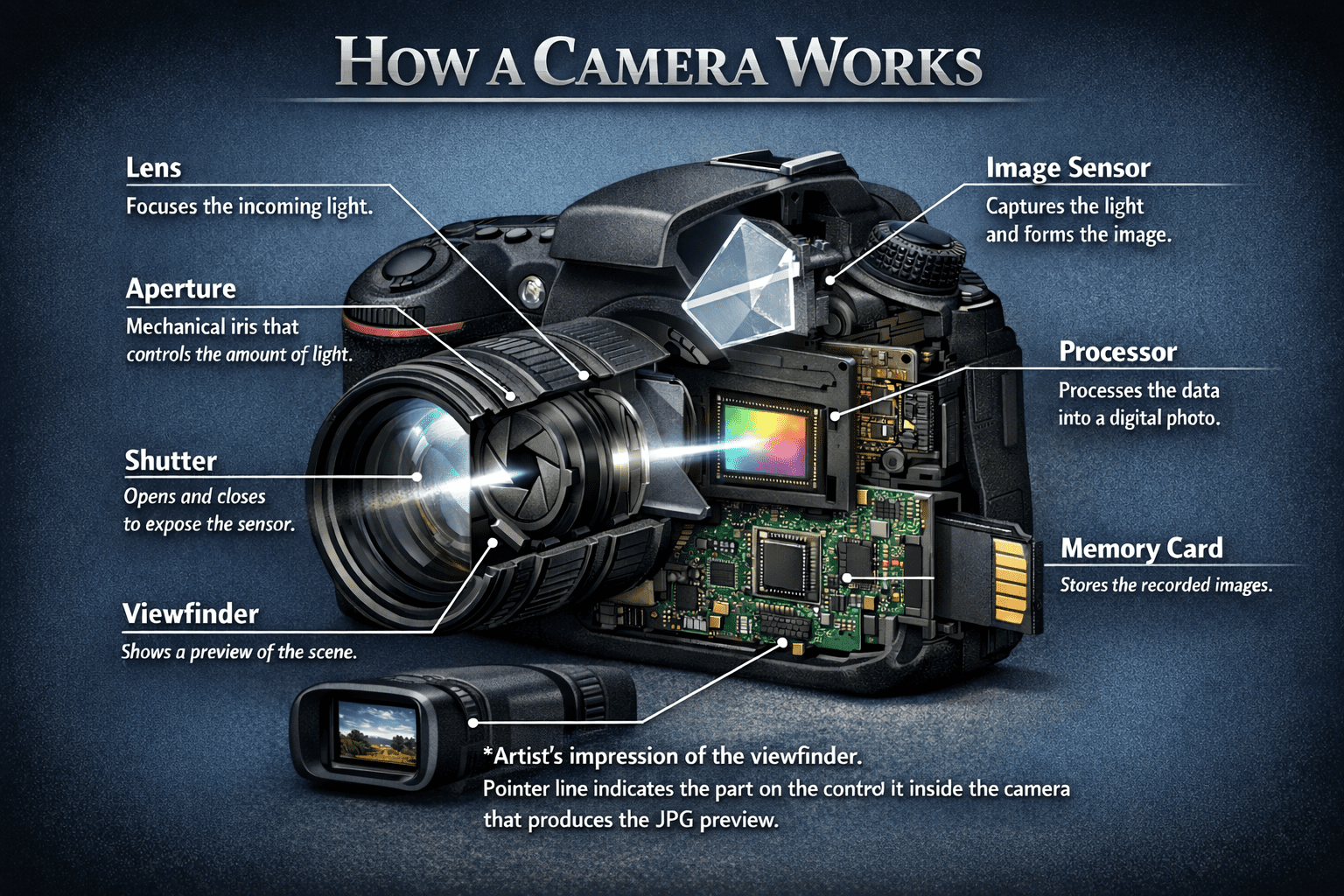
Regardless of how advanced the technology becomes, the fundamental limitation remains the same. A camera can only record light and dark.
Even modern digital cameras, impressive as they are, cannot truly see a scene the way the human eye and brain do. They rely on processors and onboard software to interpret RAW sensor data and generate a JPEG preview. That preview is created using mathematical averages between bright and dark areas, not artistic judgment.
The result is a workable image, but rarely an accurate representation of how the scene actually appeared or felt.
This is why the images you download after a shoot often fall short of what you remember seeing. The camera made a technical decision. It did not make an artistic one.
Where the Artist Comes In
Creating compelling photographic images requires far more than pressing a shutter button. It demands technical knowledge, an understanding of light, and the ability to interpret a scene emotionally and visually.
Composition, color balance, contrast, depth, and mood are all deliberate choices. The camera does not make them for me. I do.
In that sense, photography is no different from painting. Brushes, palettes, and canvases do not create art on their own. They are tools guided by the artist’s vision. My cameras and lenses serve the same purpose.
I am not a passive recorder of scenes. I am a photographic artist who specializes in the natural world.
Interpretation, Not Fabrication
There is a misconception that photographic artistry means altering reality. That is not what I do.
I do not add elements that were not present. I do not invent skies, move mountains, or fabricate wildlife encounters. What I do is interpret the scene as it appeared to my mind’s eye and communicate that experience as faithfully as possible using the tools available to me.
Light is my medium. The camera is simply the instrument.
Every image you see represents how that moment felt to me when I stood there, not how a processor decided to average a histogram.
Seeing Through the Artist’s Eye
When you view one of my images, you are not seeing what the camera saw.
You are seeing what I saw.
The stillness, the tension, the balance of light and shadow, the atmosphere that made the moment worth capturing in the first place.
That is the difference between a photograph and a piece of photographic art.
And that difference is never found in the camera itself.