


Latin binomial name: Turdus migratorius
The American Robin is one of the most widely distributed and ecologically adaptable passerine birds in North America. A member of the thrush family (Turdidae), it occupies a broad range of habitats that include deciduous and mixed forests, woodland edges, agricultural land, suburban neighborhoods, and urban green spaces. Its success across such diverse environments is largely due to its flexible diet and behavioral adaptability.
Although commonly associated with spring and summer, the American Robin is only partially migratory. In northern regions, including Michigan, many individuals remain year-round rather than migrating long distances. During winter months, robins often go unnoticed because they alter both habitat use and feeding behavior. Rather than foraging on open lawns, they become more arboreal and congregate in fruit-bearing trees and shrubs, sometimes forming sizeable winter flocks.
Morphologically, the species is readily identified by its gray to slate-brown upperparts, rich orange to brick-red breast, and bold white eye-ring. Sexual dimorphism is subtle but present. Males typically exhibit deeper breast coloration and darker head plumage, while females are slightly paler with less contrast. Juveniles are easily distinguished by their spotted breasts and buff-edged feathers.
Seasonal dietary shifts are pronounced. During spring and summer, American Robins feed primarily on invertebrates, including earthworms, beetles, caterpillars, and other soil-dwelling insects. Their characteristic stop-and-tilt foraging posture allows them to visually detect prey and sense subtle ground movement. In autumn and winter, however, robins transition almost entirely to a fruit-based diet.
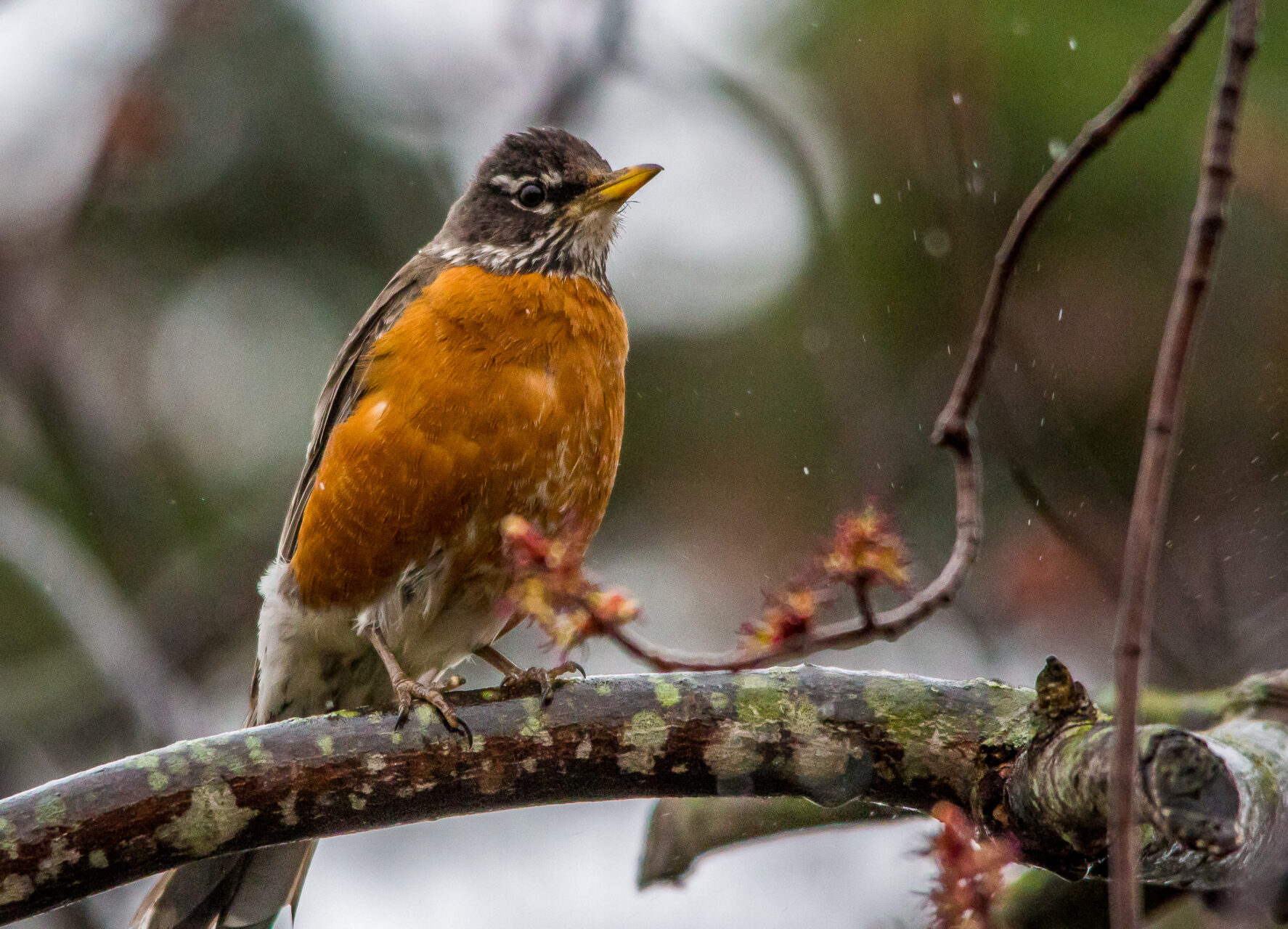
In Michigan, wintering robins are frequently observed feeding on persistent fruit sources, including juniper, crabapple, hawthorn, dogwood, sumac, and notably cherry trees. Sour cherry (Prunus cerasus) trees, in particular, are a significant winter food source where fruit remains available. Large numbers of robins may descend on these trees, stripping fruit over short periods before moving on. This behavior highlights both the importance of native and cultivated fruiting trees for overwintering birds and the robin’s role as an effective seed disperser.
Breeding begins early in the year, often before many other songbirds initiate nesting. The female constructs a robust, mud-lined cup nest using grasses, twigs, and plant fibers. Nest sites are varied and may include tree branches, ledges, porch lights, and other human-made structures. Clutches typically consist of three to five pale blue eggs, and multiple broods in a single season are common under favorable conditions.
Vocalizations are a defining feature of the species. The male’s song is a series of clear, rich, whistled phrases most frequently delivered at dawn and dusk. These songs function in territory defense and mate attraction and are often among the earliest indicators of the breeding season.
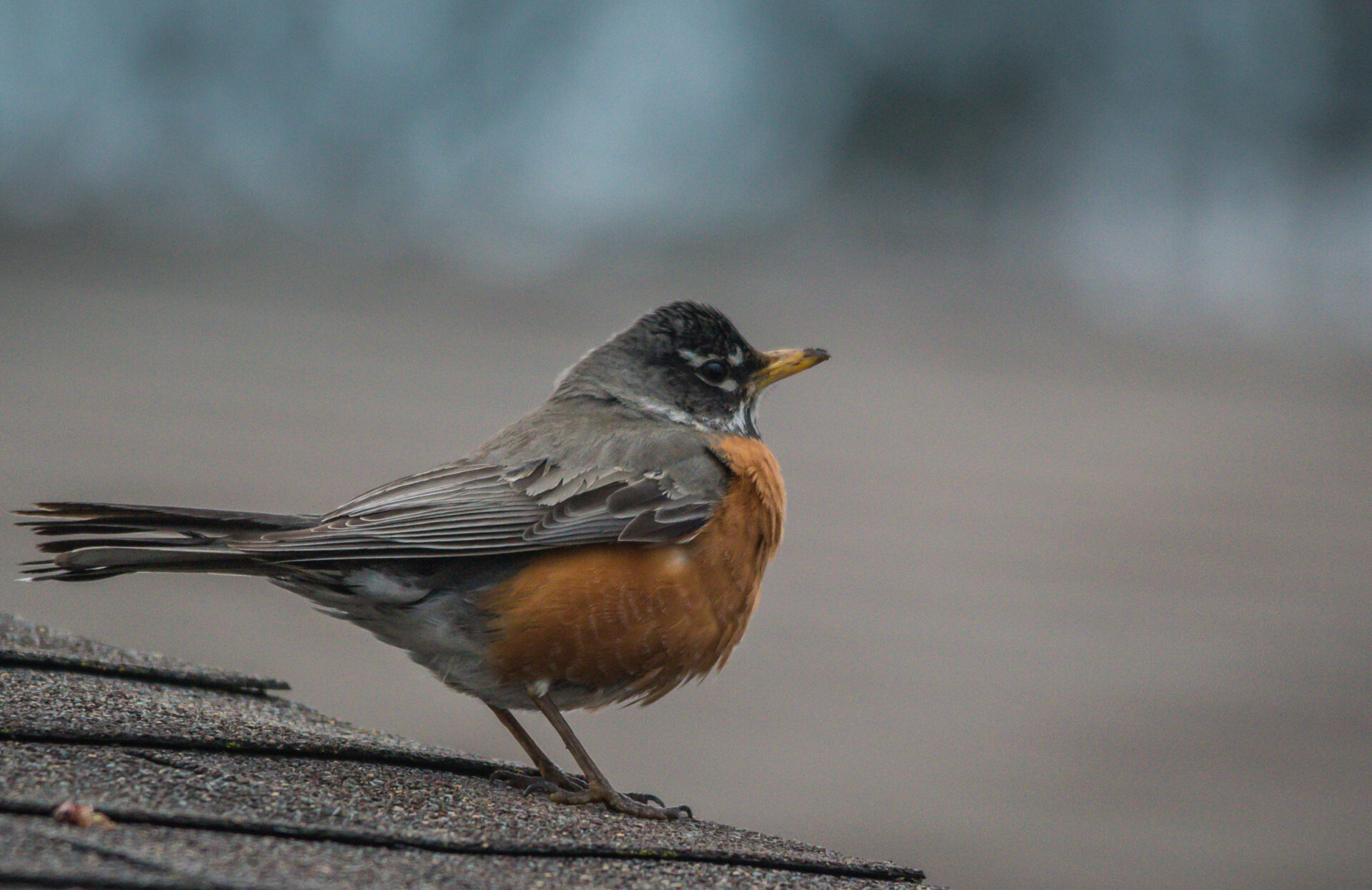
Ecologically, the American Robin plays a dual role. During warmer months, it contributes to insect population control, while in colder months it serves as an important agent of seed dispersal. Though abundant and familiar, the species provides valuable insight into seasonal ecological shifts, particularly in temperate regions such as the Upper Midwest.
Field Identification
- Size: Medium-sized songbird, approximately 9–11 inches in length
- Plumage: Gray to dark brown upperparts; orange to brick-red breast
- Eye: Prominent white eye-ring
- Bill: Yellow, often duller outside the breeding season
- Juveniles: Spotted breast, buff-edged feathers
- Behavior: Ground forager in warm months; arboreal fruit feeder in winter
- Habitat: Forest edges, lawns, parks, orchards, suburban and urban areas
Photography Tips
- Seasonal Awareness: In winter, shift your focus upward. Robins are far more likely to be found feeding in fruiting trees than on open ground.
- Winter Context: Sour cherry and crabapple trees can provide excellent opportunities to photograph robins in natural feeding behavior, often with multiple birds in frame.
- Light Quality: Early morning and late afternoon light enhances breast coloration and adds depth to winter scenes.
- Behavioral Storytelling: Images of robins actively feeding on fruit or interacting within winter flocks add ecological context beyond simple portraits.
- Lens Selection: A 300–500mm lens offers flexibility for both perched and feeding shots without encroaching on the birds’ space.
- Ethical Practice: Avoid flushing winter flocks repeatedly; energy conservation is critical during cold weather, particularly after severe storms.